Time:2026-11-06
 View:50
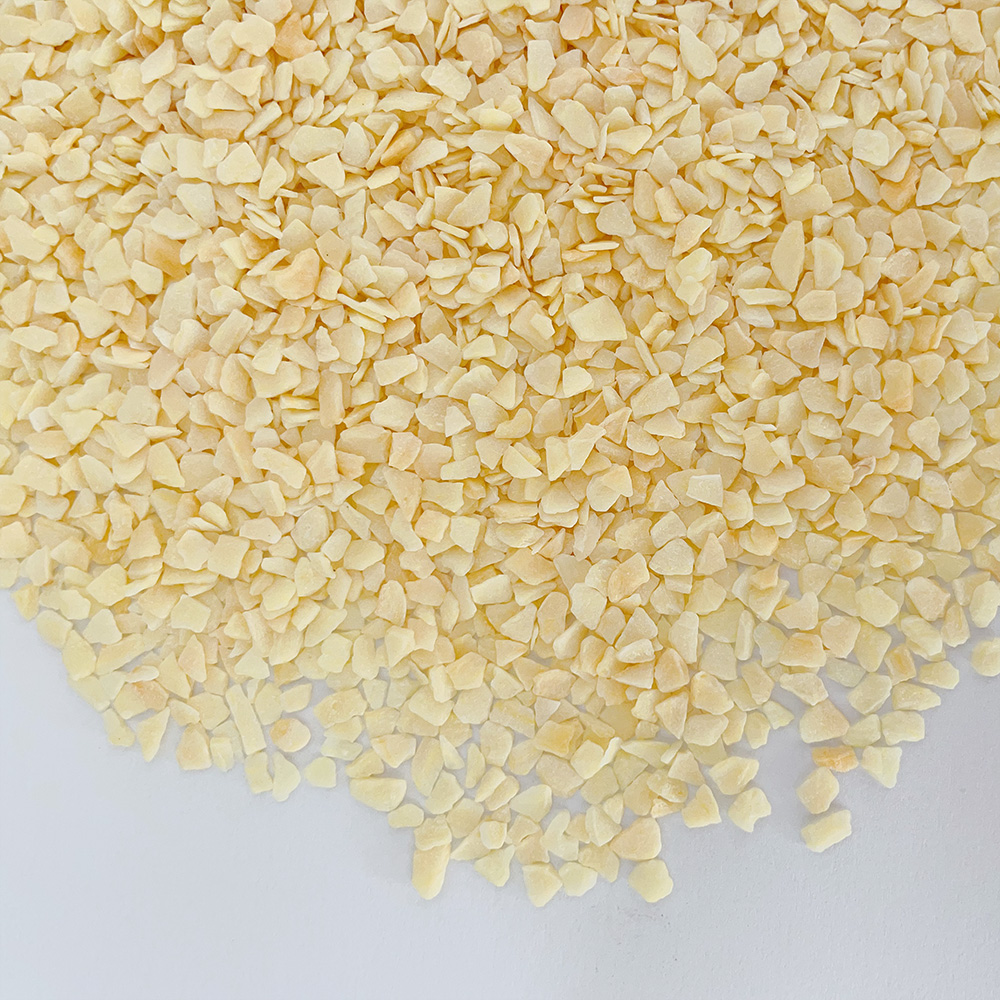
The grading of dehydrated garlic is based on the core authoritative standard GH/T 1388-2022 "Dehydrated Garlic" in the supply and marketing industry, covering three mainstream products: garlic slices, garlic granules, and garlic powder. Each category is clearly divided into three levels: first level, second level, and third level, and is accompanied by unified safety and physicochemical index requirements.
📋 Core level classification standards
This standard will be officially implemented by the All China Federation of Supply and Marketing Cooperatives in 2022, and is the general grading basis for the production, trade, and export of dehydrated garlic in China. The core differences between different grades are as follows:
|Grade | Color Requirements | Form Requirements | Impurity Limits | Core Adaptation Scenarios|
|Level 1 | Milk white or yellow white | Complete and uniform shape, no adhesive fragments | Not detectable | High end catering, exported to European and American markets|
|Secondary | pale yellow | relatively intact in shape, allowing for a small amount of fragments | not detectable | mid-range food processing, domestic supermarkets|
|Level 3 | Brown yellow | Form is basically intact, allowing for a small amount of bonding | ≤ 0.1g/kg | Seasoning raw materials, bulk procurement in the catering industry|
🔬 General physical, chemical and process indicators
All grades of dehydrated garlic must meet unified basic quality requirements, and different drying processes implement differentiated indicators:
Moisture content: Hot air dried products ≤ 8.0%, freeze-dried high-end products ≤ 6.0%, ensuring long-term storage without mold.
Ash content control: Total ash content ≤ 5.5% (on a dry basis), acid insoluble ash content ≤ 1.0%, and strict restrictions on the mixing of inorganic impurities such as sediment.
Requirement for rehydration: Garlic slices and granules soaked in 95 ℃ hot water for 2 minutes can basically restore the fresh garlic shape, reflecting the integrity of cell structure preservation.
Process difference: The retention rate of allicin in freeze-dried products can reach over 90%, far higher than the 70% in hot air dried products, belonging to the high-end premium category.
🧪 Raw materials and safety bottom line requirements
Raw garlic must comply with NY/T 1081 "General Technical Specification for Dehydrated Vegetable Raw Materials", requiring full garlic cloves, no mold, and no mechanical damage.
The safety indicators are fully aligned with the national food safety standards, and the limits of pollutants and pesticide residues are strictly controlled. No foreign impurities are allowed to be detected in the first and second level products.
At present, the top processing enterprises in the core production areas of dehydrated garlic in China, such as Jinxiang and Pizhou, have established automatic sorting lines according to this standard, which can achieve precise grading of color, shape, and impurities. The products are directly connected to the global seasoning supply chain.
Linyi Yunpeng Food Co., Ltd. is mainly engaged in the production, research and sales of various dehydrated vegetable products for the Japanese market, including dehydrated garlic, ginger, scallions, onions, horseradish, etc.
The various information published on this website is for reference only and does not represent the position or viewpoint of this website. It does not constitute any investment, medical, legal or decision-making advice. Any actions taken by users based on the information on this website are at their own risk, and this website does not assume any direct or indirect responsibility. This website does not assume any responsibility for the authenticity, accuracy, completeness, or legality of its content.